How to Unclog a Bathroom Sink Drain Yourself (Before Calling a Plumber)
Quick Answer: How Do You Unclog a Bathroom Sink?
Bathroom sink clogs are almost always hair and soap scum tangled around the pop-up stopper. Pull the stopper out, hook the clog with a $5 plastic drain stick, and flush with hot water — this clears roughly 8 out of 10 bathroom sink clogs in under 15 minutes.
Bathroom sinks clog differently than kitchen sinks — it’s hair and soap, not grease and food, and the fix is even simpler once you know where to look: right at the stopper.
What’s Actually Wrong With Your Sink? (Diagnosis)
| Symptom | Likely cause | Go to |
|---|---|---|
| Drains slowly, especially after washing hair or shaving | Hair tangled at the stopper | Fix 1 |
| Smells musty even when it drains okay | Soap scum residue in the trap | Fix 2 |
| Won’t drain at all, water pools at the surface | Full blockage past the stopper | Fix 3 |
Start with the stopper — it’s the source of most bathroom sink clogs.
What You’ll Need
- Plastic drain stick (barbed hair remover) — $5–8, sold at any hardware store
- Screwdriver — for stoppers with a mounting screw
- Baking soda and white vinegar — $3–5 combined
- Bucket and adjustable wrench — only needed for Fix 3
- Rubber gloves — hair clogs are unpleasant, not dangerous
Total if you need every fix: under $15 — still $135–285 less than a plumber visit.
Fix 1: Remove the Stopper and Pull the Clog 10 MIN · EASY
Most bathroom sink stoppers lift out or unscrew, giving you direct access to where hair actually collects.
- Look under the sink for the pivot rod connecting to the stopper — squeeze the clip and pull the rod out, or unscrew the retaining nut.
- Lift the stopper straight up and out of the drain. Some twist-and-lock styles need a quarter turn first.
- Pull the hair clump off the stopper — this alone often solves the whole problem.
- Insert the drain stick a few inches into the drain opening, twist, and pull out any remaining tangled hair.
- Rinse the stopper and reinsert it, reconnecting the pivot rod.
Stopper’s clear but drainage still slow? Flush the trap with baking soda and vinegar.
Fix 2: Baking Soda and Vinegar Flush 20 MIN · EASY
This dissolves soap scum residue coating the pipe past where the drain stick reaches.
- Pour half a cup of baking soda down the drain.
- Follow immediately with half a cup of white vinegar and cover the drain while it fizzes.
- Wait 15 minutes.
- Flush with a kettle of hot tap water (not rolling boil if you have PVC pipes).
Still not draining well? The clog has moved past the trap into the pipe — time to open the P-trap.
Fix 3: Clean Out the P-Trap 15 MIN · MEDIUM
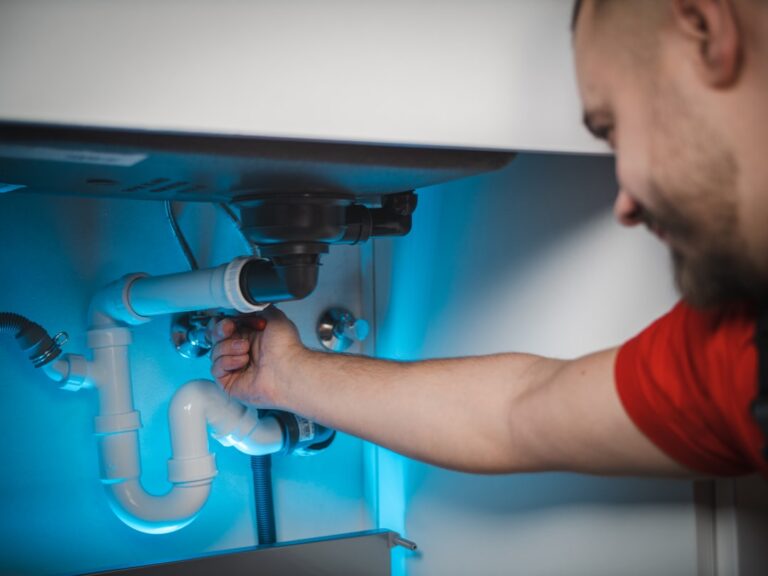
The curved P-trap under the sink physically catches whatever the stopper missed.
- Place a bucket directly under the trap.
- Loosen the slip nuts on both ends by hand or with pliers.
- Remove the trap and empty it into the bucket, clearing residue with an old toothbrush.
- Reassemble and hand-tighten, then snug slightly more with pliers — don’t overtighten plastic fittings.
- Run water and check both connections for leaks.
When You SHOULD Call a Plumber
- None of the above clears it — the blockage is likely further down the drain line.
- Multiple fixtures back up together, pointing to a shared drain line issue beyond one sink.
- You see the pipe is cracked or corroded when you open the P-trap — that needs a proper repair, not a cleanout.
Fair pricing: expect $150–300 for a standard drain clearing.
How to Stop It Happening Again
- Pull the stopper and clear hair every 2–3 months before it builds into a real clog.
- Use a mesh drain cover to catch hair before it goes down at all.
- Flush monthly with hot water to keep soap scum from settling.
- Rinse razors and combs over the trash, not the sink.
FAQ: Clogged Bathroom Sink
- Is this actually a hair problem, or could it be something else entirely?
- In a bathroom sink, hair tangled around the stopper is the cause roughly 80% of the time. If pulling the stopper and clearing hair doesn’t help at all, that’s a good sign it’s genuinely something else — move to the baking soda flush or P-trap cleanout instead of assuming more hair is hiding deeper.
- Is it safe to use a straightened wire hanger instead of buying a drain stick?
- It works in a pinch, but a barbed plastic drain stick grips hair far better and won’t scratch the inside of a porcelain or metal drain the way a stiff wire can.
- Why does my bathroom sink smell bad even though it drains just fine?
- Decomposing hair and soap residue sitting in the P-trap causes odor even without a full clog. A baking soda and vinegar flush usually clears the smell within one treatment.
The Bottom Line
A clogged bathroom sink is almost always a five-minute stopper problem, not a plumbing emergency — $5–15 in total against a $150–300 plumber bill. You just saved yourself a service call.
Keep going: Clogged Kitchen Sink? How to Unblock It · How to Fix a Leaky Faucet · more in our Plumbing fix guides.